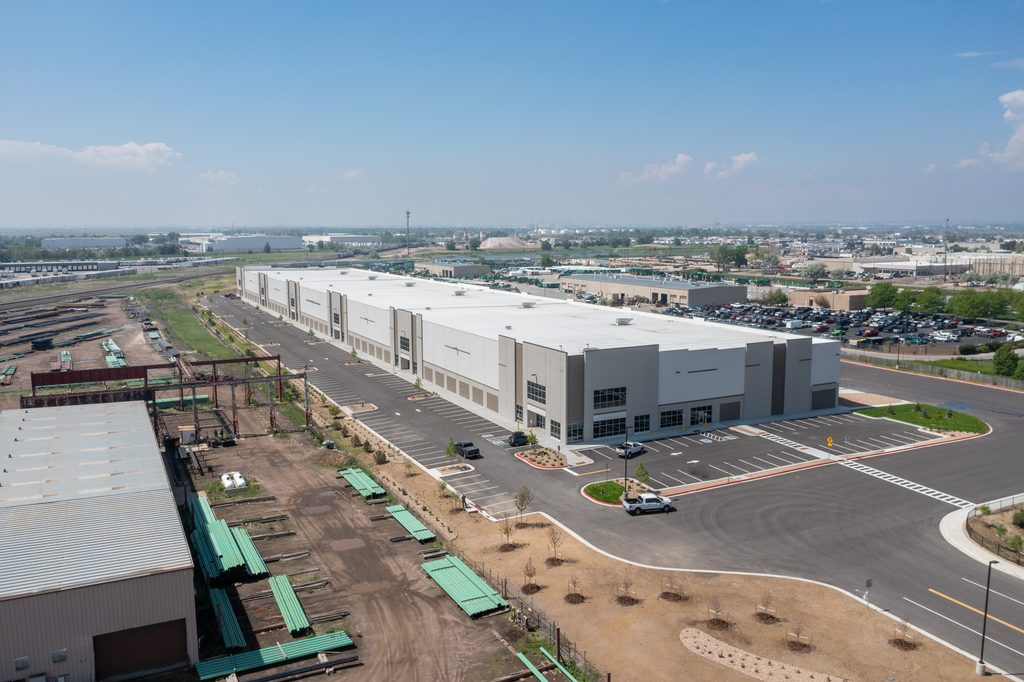
The industrial real estate market is finding its footing in 2026, but automation, rising power demands and supply chain uncertainty are forcing occupiers to rethink what makes a warehouse valuable moving forward.
According to JLL, U.S. industrial leasing activity reached 175.7 million square feet in the second quarter of 2026, a nearly 50% increase year-over-year and the strongest quarterly performance in more than three years. Net absorption climbed to 99.1 million square feet, while national vacancy declined to 6.8%.
Yet improving market fundamentals don’t necessarily translate into equal demand for every industrial property. As SIOR members across North America observe, occupiers are increasingly prioritizing facilities that address challenges around power availability, automation and labor efficiency while providing the flexibility to adapt to changing operational needs.
Modeling Site Selection for Total Cost of Operations
For industrial occupiers, a property’s long-term value increasingly depends on more than its rental rate. Building design, infrastructure and location can significantly influence transportation, labor, inventory management and other operating expenses.
“The entire model has shifted to ‘total cost of operations,'” said Bronwyn Scrivens, SIOR, Vice President of Industrial at JLL in Edmonton and SIOR’s Regional Director for Canada,. “We model how a building’s design and location impacts labor, transportation, inventory management and energy costs—the rent is just one component.”
A property offering lower rent may ultimately cost more if its loading configuration creates bottlenecks, its electrical infrastructure cannot support automation or its location increases transportation expenses. Conversely, a more expensive facility may justify its premium through greater operational efficiency.
In the Greater Toronto Area, Scrivens sees companies prioritizing throughput and transportation efficiency. In land-constrained Vancouver, maximizing usable building volume is critical. Alberta’s resource-oriented economy, meanwhile, places greater emphasis on operational flexibility, equipment access and outdoor space.
The most competitive industrial building is not necessarily the one with the highest specifications, but the one best suited to its intended users.
Why the Yard Is Becoming as Important as the Warehouse
While automation and clear heights receive considerable attention, the land surrounding an industrial building is increasingly analyzed for market differentiators that promote operational efficiency.
Truck circulation, trailer staging and employee parking directly affect a facility’s ability to move products. Even a modern warehouse can create costly inefficiencies if trucks cannot maneuver easily or trailers must be stored off-site.
A September article by Beki Dobson, SIOR, of Miller Industrial Properties in Reno, Nevada, outlined the characteristics of successful modern truck courts. She emphasized the importance of depth from 130 to 180 feet deep to accommodate trailer maneuvering, design that allows for separate car and truck traffic to reduce bottlenecks and improving safety, and space that can handle additional trailer parking if your operations expand.
“A distribution center is only as functional as its truck courts, docks, and doors,” Dobson wrote.
Scrivens similarly describes parking, circulation and trailer staging as “critical operational buffers in a high-friction logistics environment.”
“In a world of port congestion and transportation delays, an inefficient yard is a direct financial liability and a weakness that the market will quickly expose.”
These considerations create opportunities for owners to distinguish properties through targeted site improvements that may offer greater value than additional interior amenities.
Industrial Outdoor Storage Finds Its Place
The importance of yard functionality is also elevating industrial outdoor storage (IOS) as a distinct investment and leasing category.
Traditionally associated with truck parking, equipment storage and contractor yards, IOS is increasingly part of broader supply chain and inventory management strategies.
“IOS has been elevated from an afterthought to a strategic asset for risk management,” Scrivens said.
Secured, paved yards allow companies to purchase and store materials in bulk, providing flexibility during supply chain disruptions. In Alberta, outdoor storage can be essential for resource-oriented businesses, while land scarcity makes functional IOS particularly valuable in Toronto and Vancouver.
Recent commentary and transactions involving SIOR members illustrate how demand is evolving, with occupiers and investors increasingly focused on site functionality, location and operational flexibility.
“Charleston’s industrial outdoor storage market remains fundamentally healthy, although leasing velocity has moderated from the pace experienced during the last several years,” reported Brooks Courtney, SIOR, Vice President at Bridge Commercial in a September 30 market update. “Tenant activity has become increasingly selective, with the greatest depth of demand currently concentrated among users seeking approximately two to four acres.”
A September transaction in Murray, Utah, offers another example of the appeal of well-located IOS properties. Jadian IOS acquired a 5.78-acre site with approximately 28,000 square feet of industrial improvements and simultaneously secured building products distributor QXO as a tenant. Rusty Bollow, SIOR, and Bobby Stevens, SIOR, of Colliers represented the transaction, illustrating the appeal of properties that combine outdoor storage capacity with existing industrial infrastructure.
Together, these examples underscore how the value of IOS increasingly depends on the same considerations shaping the broader industrial market: location, functional infrastructure and the ability to meet specific occupier needs.
Industrial Flexibility Extends Beyond the Property Line
Functionality also depends on how industrial properties fit within regional and national supply chains.
Scrivens points to Canada’s geography, where a relatively small number of transportation corridors and logistics hubs connect vast distances. Calgary and Winnipeg serve important interchange functions, while expanding West Coast port activity through gateways such as Prince Rupert is influencing freight movement through Edmonton and other inland distribution markets.
These dynamics reinforce why site selection requires understanding transportation infrastructure and supply chain resilience beyond an individual property’s boundaries.
For owners, developers and investors, the most valuable assets will be those capable of accommodating changing operational demands without costly reinvestment or relocation. That may mean greater electrical capacity and taller clear heights in one market, or more yard space and outdoor storage in another.
“At the end of the day, the buildings that will hold their value are the ones that function as true business partners for the occupier,” Scrivens said. “They solve for power, they solve for logistics bottlenecks, and they help companies become more flexible and resilient in an ever changing global economy.